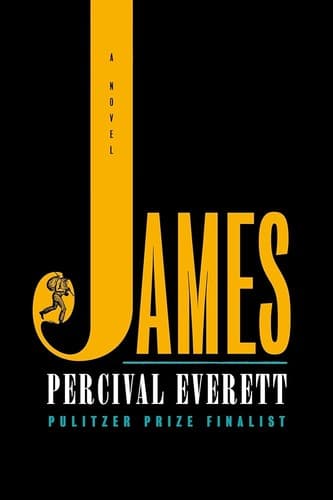
James
Percival Everett reimagines Mark Twain's Adventures of Huckleberry Finn from the perspective of Jim, the enslaved man whose intelligence, dignity, and interiority the original novel could never fully see.
“Percival Everett has written the great American novel hiding inside the great American novel. James is funny, furious, heartbreaking, and brilliant, a book that makes you rethink a classic and confront the stories we tell about our history. It deserves every award it has received and more.”
James is a novel that performs a kind of literary justice without ever feeling like a corrective exercise. Percival Everett, one of the most inventive and prolific American novelists working today, takes the scaffolding of Twain's most celebrated and controversial novel and rebuilds it from the inside out. His Jim, renamed James, is a man of formidable intellect who has learned to perform ignorance as a survival strategy, code-switching between the dialect white people expect and the articulate inner voice they would find threatening.
This conceit, which could easily have been a one-note gimmick, instead becomes the engine of a profound exploration of language, power, and selfhood under slavery. Everett writes with a controlled fury that never sacrifices nuance for polemic. His Mississippi is a landscape of constant danger where every interaction is a negotiation and every word is a potential weapon. The novel follows James through adventures that parallel and diverge from Twain's plot, including harrowing encounters with minstrel performers, slave catchers, and the casual brutality of a system that treats human beings as property.
What elevates James beyond even its considerable intellectual ambitions is its emotional depth. Everett finds in James a father's desperate love, a husband's longing, and a thinker's rage at being reduced to a stereotype. The novel's final pages deliver a reckoning that is both historically specific and universally devastating. This is American fiction at its finest, a book that engages with the canon not to tear it down but to reveal what was always hidden in plain sight.
Keep Reading
More in Books
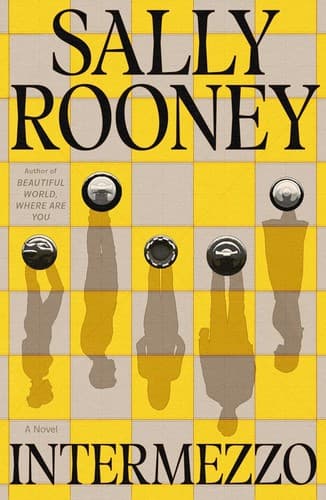
Intermezzo
Sally Rooney's fourth novel follows two grieving brothers whose romantic entanglements force them to confront what they owe each other and what it means to be truly known by another person.

Orbital
Samantha Harvey's Booker Prize-winning novel tracks six astronauts aboard the International Space Station over a single day, turning 16 orbits of Earth into a meditation on beauty, fragility, and what it means to see our world from above.
Get Our Weekly Picks
The best in film, television, and literature - curated and delivered every Friday. No spam, no algorithms, just taste.
Free forever. No spam. Unsubscribe anytime.